
Google Ads vs. Facebook Ads: Which One Is Right for Your Business?
There’s a common misconception that businesses don’t necessarily need to pay for advertising if they can focus on unpaid, organic growth. However, that isn’t the case.
Organic growth and word of mouth are great for starting a business, but paid advertising is often essential for scaling up over time. When it comes to online advertising, many businesses find themselves deciding between Google Ads and Facebook Ads. Both are giants in today’s world, but their strengths and weaknesses are critical to determining which is best for you.
Understand the Platforms
Google Ads:
Google Ads operates on a pay-per-click (PPC) model, which allows you to bid for ad space in Google’s search results and across its network. Also called paid search, Google Ads enables a business to have its listing features on a search engine result page (SERP). It focuses on targeting users who are actively searching for specific information, products, or services, which indicates a higher purchase intent.
With Google Ads, you can advertise on:
- Google Search
- YouTube Ads
- Google Display Network
- Google Maps
Facebook Ads:
Like Google Ads, Facebook Ads, too, operate on a PPC basis, but its focus lies on paid social media advertising. The way Facebook’s algorithm works, it has become harder to reach potential customers organically, which makes social media ads a vital tool. Facebook Ads allows you to get your ads in front of new customers on social networks.
Facebook ad placements include:
- Facebook Feed
- Instagram Feed
- Facebook Marketplace
- Facebook Video Feeds
- Facebook Right Column
- Audience Network
- Facebook Messenger
- Oculus mobile app Feed
Key Differences Between Google Ads & Facebook Ads
While Google Ads and Facebook Ads share some similarities, there are key distinctions that can influence your advertising strategy.
Reach: Google’s reach is unparalleled, as it is the most visited website in the world. Google processes over three billion searches per day. Facebook has three billion monthly active users, but Google operates on a different scale.
Targeting Options: Google Ads targets users based on the keywords they enter into Google, making it effective for reaching people with specific needs or intent. Facebook Ads uses detailed demographic and psychographic data, such as age, location, interests, and behavior, to target users.
Ad Formats: Google Ads’ most popular format is the text-based search ad. While Google display ads can include images, they offer fewer creative options. Facebook Ads provide greater flexibility with visually driven formats, including images, videos, and carousels. Facebook Ads require visual elements like images or videos to be the focal point, often leading to more eye-catching ads. Alternatively, Google Ads allows you to create simple, text-based ads, which might be ideal for beginners to paid advertising.
User Intent: Google Ads targets users who are actively searching for specific information, products, or services. Facebook Ads aims to capture user attention based on their profile data and assumed interests.
Here is a table summarizing the key differences:
| Feature | Google Ads | Facebook Ads |
| Targeting | Keywords, search intent | Demographics, interests, behavior |
| Ad Placement | Google Search, YouTube, Google Display Network | Facebook, Instagram, Messenger, Audience Network |
| User Intent | Active | Passive |
| Ad Formats | Text-based, display ads | Images, videos, carousels |
| Campaign Objective | Direct response, capturing demand | Brand awareness, generating demand, influencing consideration |
When to Use Google Ads
Google Ads is ideal when you want to reach users with a clear intent. It is best for driving conversions like sales or leads, especially when users are actively searching for specific products or services. Google Ads yields the best results when your target user is actively searching the web for products or services similar to yours. Google Ads is typically more effective for direct response objectives because of its high-intent audiences.
When to Use Facebook Ads
Facebook Ads is preferred for building brand awareness and reaching a broad audience based on interests and demographics. They are also useful for influencing consideration stages by engaging users who might not be actively seeking your product. Facebook ads work best in widening your audience if you focus on demographics, interests, and user behaviors. Facebook Ads, with its more visually engaging formats, is better suited for brand awareness building and engagement.
The Best Strategy? Use Both
Many businesses use both platforms to maximize their reach and effectiveness. Google Ads can capture direct conversions, while Facebook Ads can increase awareness and engagement. Using both allows you to leverage each other’s strengths. Use Facebook Ads to introduce your brand and create awareness, then use Google Ads to capture high-intent searches and close the sale.
Understanding Google Algorithm Updates: What They Mean for Your Business
How prepared is your website for the next Google update? The search engine giant is known to modify its algorithms frequently to give users the most accurate results from their searches. Of course, these changes can benefit or cause upheaval depending on the condition of your site, so understanding them impacts how a company evolves significantly, irrespective of its ranking goals.
Do Google algorithms seem difficult? They are complex, but not when we are around. At TechiEvolve, our SEO experts are up-to-date with these revisions, intricately assessing every detail. We will break the wall and help you understand everything you need about the latest updates.
The Importance of Following Google Algorithm Updates
The search engine aims to provide relevant, reliable, and high-quality information to its searchers. By adopting these changes, websites improve their credibility and earn Google’s trustworthiness. The updates enhance a website’s performance and demonstrate its authority and expertise, which boosts its rank.
For a business to be on the competitive front, staying updated on Google algorithm updates is a must! By adapting to these changes, companies can provide genuine value to their consumers. Expect your business to achieve better results in the long run by offering value to consumers.
What Are Google’s Core Updates?
These are major changes to the engine’s search algorithm that improve the ranking of information available online. Any website that welcomes these changes becomes easier to locate through a search query.
The aim is to help Google see your website as a valuable resource for the user. A quality website is rewarded with higher ranks, more visitors, and, ultimately, more business. Poor-quality or spam sites fall behind, eventually getting lost in nowhere.
What Does Google’s Core Updates Do?
- Promote High-Quality Content: They help Google find web pages that provide users with reliable, straightforward, valuable, and well-written content.
- Improve Content Relevance: Core updates make it easy for consumers to find valuable information based on their significance. It helps Google match the results to user searches.
- Boost User Experience: The updates locate websites with well-structured and easy-to-use designs that improve user experience and encourage return visits.
- Align with New User Behavior: Core updates evaluate changing user behaviors to ensure their search results are satisfactory and not outdated.
Key Features of Google’s Latest Algorithm Updates
-
User-Generated Content Over Search Engine-Generated
The primary objective of this algorithm update was to promote user-generated content instead of search engine-generated content. So, creating fluffy content filled with keywords cannot make the cut. Google now rewards user-focused content that imbues creativity. It simply wants users to find helpful material instead of spam.
-
Core Web Vitals Update
This part of the update prioritizes page performance, visual stability, and user interaction as crucial ranking criteria, giving preference to websites offering a seamless user experience and boosting user engagement and retention.
-
Mobile-First Indexing
The need to develop responsive websites isn’t new, but Google’s focus on mobile-friendliness evolves with almost every update. More and more people now access the internet using their mobile devices, so Google ranks websites that appear and run smoothly on mobiles.
-
Product Reviews Update
Why do almost every business show great customer reviews but turn out to be average or below average in terms of products and services? You can guess the answer. With this update, Google identifies genuine, thorough, and informative reviews, providing consumers with trustworthiness and helping them make better decisions when shopping online.
-
E-E-A-T
It stands for Experience, Expertise, Authoritativeness, and Trustworthiness, a set of guidelines Google uses to evaluate the quality of web pages. Its goal is to ensure only reliable and relevant materials are found in the search results.
-
Spam Updates
Google has always disliked spam and is constantly trying to eliminate it. This update targets manipulative content and pages and penalizes them. As a result, searchers are less likely to find spammy content in their searches.
-
Local Search Updates
Often, local businesses are overshadowed by bigger, wide-spanning companies. After the update, search results focus more on showing local companies based on geographic locations and relevancy, giving location-specific results.
How to Adapt to the Latest Google Updates?
Create High-Quality Content: It’s time to get out of the keyword-stuffing habit and focus on meaningful, unique content that answers user queries. Bring depth to your content because that’s what Google wants—it is what users want too.
Improve E-E-A-T: Scale up to this requirement by exhibiting your knowledge through thoroughly researched articles. Take references from reliable sources and ascertain that all the information is true.
Optimize for Mobile and Core Web Vitals: First of all, your website should be responsive (there’s no other way around it in 2025). Then, test it for visual stability, page loading speed, and ease of use. It could be the way to more visits and engagements.
Perform Regular Content Audits: Your existing content needs to be audited. You would be surprised to discover what works and what doesn’t. Update outdated content or replace it with new ones.
Build Natural Backlinks: Get quality backlinks from reputable websites. Google won’t be kind to deceptive link-building tactics.
Conclusion
In this digital realm where Google is the world’s leading search engine, and algorithms keep changing, staying up-to-date with them is the only way to succeed. These changes improve user experience and reward high-performing websites. Incorporating these changes provides high value in the long run.
Having difficulty with your website? Talk to our experts, and we will guide you through the complexities. Talk to TechiEvolve!
Top 5 Digital Marketing Trends to Follow in 2025
Like every year, marketing trends are here to change how the digital world will fare. Yes, often, the trends are similar to what has been the year before, but sometimes, the term “trend” stands up to its true meaning.
If you’re a marketing enthusiast or a business owner aiming to make the most of this year and stand tall ahead of the curve, getting to know the trends can work wonders for you. Every aspect of consumer behavior changes with innovation, and with it comes the opportunity to grow fast—of course, if you can pull off the trick before your competitors.
Let’s not dilly-dally and understand the digital marketing trends in 2025 to connect with your audience better, catapult your online presence to the peak, and drive improved results. Buckle up!
1. AI-Powered Marketing—The Top of the List
Nothing beats artificial intelligence (AI) this year. While AI has been around for a while, the launch of ChatGPT changed the way marketing is done. Now, there are many AI tools that have become a part of digital marketing fast. From generating content to getting customer insights, AI is pushing innovation to the forefront of everything.
Use AI-powered tools to enhance personalization, incorporate automation (if you haven’t yet), and create precisely targeted campaigns that resonate with individual consumer preferences. Here’s why:
● Hyper-Personalization: AI empowers you to deliver customized experiences to every customer based on their preferences, behavior, and purchasing patterns.
● Advanced Analytics: If what you were getting seemed to fall short, it won’t be anymore. AI helps you look deeper into customer data, which simplifies understanding consumer needs and predicting what’s to come.
● Automation: Save precious time to work on your business’s more critical aspects by letting AI handle email marketing and social media posting.
2. Interactive and Immersive Experiences—Have Users Feel Your Commitment
It has always been and will continue to be one of the biggest trends in the years to come. Everybody wants more engaging experiences where they can participate. There can be beautiful static content that feels right, but making them interactive will make them entice users to engage. How do you do it?
● Augmented Reality (AR): Using VR is not ideal because your users won’t be carrying a VR headset wherever they go. So, AR is the key. Provide interactive shopping experiences to customers with product demos and more directly from their smartphones.
● Gaming Elements: Everybody’s a gamer at heart, especially those who love to use their phones or computers. Implementing gamified aspects to your campaigns, like completing puzzles or challenges to earn reward points will make your content loveable.
3. Short-Form Video Content Dominates—And You Already Know That
The craze of Instagram reels, YouTube shorts, and Facebook stories proves how videos have taken over all other forms of social media content. It’s just growing in 2025. Long-form content is popular, especially when telling a story or educating audiences, but short videos are perfect for quick user engagement.
● Engage the Eyes: Videos engage more than static images or written text. Use it to your advantage. Grab the audience’s attention quickly.
● Make Shopping Fun: Shoppable videos make e-commerce enjoyable. Consumers can buy products directly from videos.
● Tell Stories: With short-form engagement by its side, use long-form videos to establish connections with your audience. Tutorials and behind-the-scenes (BTS) attract.
4. The Rise of Voice and Visual Search
As technology advances, people seek effortless solutions. Search tools like voice and visual searches are reducing time consumption. You likely know about Siri, Google Assistant, and Alexa. People use them for searches. Use this to your advantage. Here’s what you need to know:
● Conversational SEO: Voice searches can be lengthy and typically natural, just like a conversation. Optimize your content for longer, question-based keywords to capture voice search traffic.
● Mobile Optimization: Mobile first, always! Voice searches are made for mobile devices. Ensure you have a mobile-optimized website so voice searches can find them easily.
● Local SEO: Local intent and voice search go hand in hand. Focus on boosting your local SEO efforts to target users searching for nearby services or products.
5. Influencer Marketing Goes Niche—Boost Your Authenticity
Influencer marketing has seen a surge since IG became popular. It got better with time, and 2025 could be your sweet spot to leverage it. But remember, consumers are more skeptical now. Paid promotions to them feel like forced good reviews, so build long-term relationships with influencers who actually align with your business values. Try these:
● Micro Influencers: They tend to have a smaller following but loyal followers who trust their judgments and follow their lifestyle. You should invest more in them for authentic, more targeted campaigns.
● Transparency: What’s the best way to impress the audience? Honesty. Since consumers generally expect paid collaborations between brands and influencers, transparency can go a long way to help build lasting relationships.
Get Ready for the Future
As you enter the new year, the digital marketing landscape continues to evolve at a rapid pace. It’s necessary for marketers and business owners to be up-to-date with everything that’s going on and is predicted to come in the coming months. Also, focus on the above trends and start getting your move on. Remember, change is the only constant.
Top 15 Shopify Marketing Tools for E-Commerce Stores
Do you want to grow your business? In the world of e-commerce, staying ahead of the competition requires more than just a great product and a well-designed store. It demands a strategic marketing approach that leverages the latest tools and technologies. For Shopify store owners, the right marketing tools can make the difference between a thriving business and one that struggles to gain traction.
In this blog post, we’ll explore the top 15 Shopify marketing tools to help you attract, engage, and retain customers, ultimately driving your store’s success to new heights. These tools are for both seasoned entrepreneurs and those just starting out. They can help in maximizing your e-commerce potential.
Klaviyo
Klaviyo is a powerful email marketing tool that integrates seamlessly with Shopify. It allows you to create targeted email campaigns based on customer behavior, preferences, and purchase history. With its robust automation features, you can set up workflows to nurture leads and increase sales.
Key Features:
– Advanced segmentation
– Personalized email campaigns
– Detailed analytics and reporting
Omnisend
Omnisend is another excellent email marketing tool that also supports SMS and push notifications. Its user-friendly interface makes it easy to create and automate multi-channel campaigns, ensuring your message reaches customers wherever they are.
Key Features:
– Pre-built automation workflows
– Drag-and-drop email builder
– SMS and push notification support
Privy
Privy is a lead capture and conversion tool that helps you grow your email list and drive more sales. It offers various pop-up forms, banners, and bars to capture visitor information and promote special offers.
Key Features:
– Customizable pop-ups and banners
– Exit-intent technology
– Integration with major email platforms
PushOwl
PushOwl is a push notification app that helps you re-engage visitors who leave your store without making a purchase. With its automated abandoned cart notifications and back-in-stock alerts, you can bring customers back and increase conversions.
Key Features:
– Automated push notifications
– Abandoned cart recovery
– Back-in-stock alerts
Yotpo
Yotpo is a review and user-generated content platform that helps you build trust and social proof. It allows you to collect and display customer reviews, photos, and videos on your Shopify store, enhancing credibility and boosting sales.
Key Features:
– Review collection and display
– User-generated content galleries
– Integration with social media
Hootsuite
Hootsuite is a social media management tool that enables you to schedule, manage, and analyze your social media posts across multiple platforms. It helps you maintain a consistent social media presence and engage with your audience effectively.
Key Features:
– Multi-platform scheduling
– Social media analytics
– Team collaboration features
ReferralCandy
ReferralCandy is a referral marketing tool that helps you leverage word-of-mouth marketing by rewarding your customers for referring new buyers. It offers customizable referral programs that integrate seamlessly with your Shopify store.
Key Features:
– Customizable referral programs
– Automated reward delivery
– Detailed referral tracking
SEO Manager
SEO Manager is a comprehensive SEO tool for Shopify stores. It helps you optimize your site for search engines, ensuring that your products and pages rank higher in search results and attract more organic traffic.
Key Features:
– Keyword suggestions
– SEO audit and analysis
– On-page SEO optimization
Google Analytics
Google Analytics is a must-have tool for tracking and analyzing your e-commerce store’s performance. It provides detailed insights into your traffic sources, visitor behavior, and conversion rates, helping you make data-driven decisions.
Key Features:
– Traffic and conversion tracking
– Audience insights
– Customizable reports
Hotjar
Hotjar is a behavior analytics tool that provides heatmaps, session recordings, and surveys to help you understand how visitors interact with your store. This information can help you optimize your site’s user experience and increase conversions.
Key Features:
– Heatmaps and session recordings
– User feedback and surveys
– Funnel analysis
Mailchimp
Mailchimp is a popular email marketing and automation platform that integrates well with Shopify. It allows you to create email campaigns, automate workflows, and segment your audience for more personalized communication.
Key Features:
– Email campaign creation
– Marketing automation
– Audience segmentation
AdRoll
AdRoll is a retargeting and display advertising tool that helps you bring back visitors who have left your store without making a purchase. It offers personalized ad campaigns across multiple platforms to re-engage potential customers.
Key Features:
– Retargeting campaigns
– Multi-platform ad placements
– Detailed performance analytics
Fomo
Fomo is a social proof tool that displays real-time notifications of recent customer activities on your store, such as purchases and reviews. This creates a sense of urgency and trust, encouraging more visitors to take action.
Key Features:
– Real-time activity notifications
– Customizable notification designs
– Integration with various apps
Gorgias
Gorgias is a customer support tool that centralizes all your customer interactions in one place. It integrates with Shopify to provide a seamless support experience, allowing you to manage emails, live chats, and social media messages efficiently.
Key Features:
– Multi-channel support
– Shopify integration
– Automation and macros
Smile.io
Smile.io is a loyalty program tool that helps you create and manage rewards programs for your customers. By offering points, discounts, and other incentives, you can encourage repeat purchases and increase customer retention.
Key Features:
– Customizable loyalty programs
– Points and rewards system
– Integration with email and social media platforms
Conclusion
These 15 Shopify marketing tools can help you enhance your e-commerce store’s performance, attract more customers, and boost sales. From email marketing to social proof and customer support, these tools cover all aspects of effective marketing.
Was Google Fooling Us? HUGE Google Search Document Leak
First, neither has the Google Search algorithm been leaked nor do SEO professionals suddenly have all the solutions. However, the leak of such a massive amount of Google documents is significant as it provides an unprecedented look into the internal workings of Google.
The most crucial revelation from 2,500 documents is that the search engine giant may have misled people about how it evaluates and ranks content for its search engine.
We know nearly nothing about Google’s content ranking processes. Every website relies on search traffic for survival. Many will go to great lengths to surpass competitors and reach the top of the SERPs. The higher the ranking, the better the visits, translating to more revenue. As a result, website owners follow every word Google publishes.
Over time, Google representatives have denied that user clicks affect website rankings. Testimony from the US Department of Justice’s antitrust suit unveiled a ranking factor called Navboost, which uses searchers’ clicks to rank content in search results.
According to Rand Fishkin, a veteran of the search engine optimization (SEO) industry, the meta takeaway is that more of Google’s public statements about the data they collect and the method their search engines use to work have evidence against them.
The leak became public after SEO experts Fishkin and Mike King published some of the documents’ contents earlier this week, along with their analyses. The leaked API documents contain repositories with information about and definitions of data Google collects, some of which may inform web page rankings. Initially, Google dodged questions about the documents’ authenticity before confirming their.
Google spokesperson Davis Thompson cautioned against making inaccurate assumptions about Search using outdated, incomplete, and out-of-context information. He said they have shared abundant information about how Search works and the factors that Google weighs while securing the integrity of the results from manipulation.
The documents don’t specify how different attributes are weighted. It’s possible that some attributes — like an identifier for “small personal sites” or a demotion for product reviews — were used at one point but have since been phased out. They may have never been used for ranking sites at all.
King said that they do not know how the named factors are being used and the only thing they know is that they have different descriptions.
The idea that the world’s largest search platform doesn’t base rankings on user engagement seems absurd. Yet, repeated denials, carefully worded company responses, and industry publications that uncritically carry these claims have made it a contentious topic among SEO marketers.
Another significant point highlighted by Fishkin and King concerns how Google might use Chrome data in its search rankings. Google Search representatives have claimed they don’t use anything from Chrome for ranking, but the leaked documents suggest otherwise. One section, for instance, lists “chrome_trans_clicks” as influencing which links from a domain appear below the main webpage in search results. Fishkin interprets this as Google using the number of clicks on a page in Chrome to determine the most popular/important URLs on a website, which go into the calculation of which to include in the sitelinks feature.
With over 14,000 attributes mentioned, researchers will be examining the documents for weeks to uncover hints. There’s mention of “Twiddlers,” or ranking tweaks deployed outside major system updates, that adjust content ranking based on certain criteria. Elements of webpages, such as the author’s identity, are mentioned, as are measurements of a website’s “authority.” Fishkin notes that much is absent from the documents, like information about AI-generated search results.
So, what does this mean for everyone outside the SEO industry? Expect website operators to scrutinize this leak and try to decipher it. SEO often involves experimenting to see what works, and publishers, e-commerce companies, and businesses will likely conduct various tests based on the documents’ suggestions. As a result, websites might start to look, feel, or read differently as these industries try to understand this new, albeit vague, information.
Must Read: Shopify VS. Magento: Which is Better for Running Promotions?
Shopify VS. Magento: Which is Better for Running Promotions?
Anybody who knows anything about e-commerce knows these two names – Shopify and Magento – two of the biggest names in the list of e-commerce platforms.
They offer advanced features to help companies scale themselves. While essentially serving the same purpose, i.e., e-commerce, as two different applications, they are slightly different, and these distinctions affect how your business operates.
But is one better than the other? Which to opt for – Shopify or Magento? Let’s find out right now!
Shopify:
Any business owner looking to start an online business without the hassle and wants an easy-to-use website builder with a simple interface will love Shopify. They also get access to various e-commerce functionalities and compatibility with third-party digital tools.
Magento:
Magento, now Adobe Commerce, is an e-commerce platform providing a consistent experience for businesses of all sizes. Create multichannel experiences and initiate several multilingual websites. It has over 3,600 native integrations available in Adobe Marketplace for optimizing the website, marketing, shipping, and customer support.
Shopify is a better tool for small and mid-sized businesses because of its user-friendliness. Adobe Commerce allows for building unique branded experiences and adding complex website functionalities.
Main Features of Shopify and Magento
Promotions are ideal for e-commerce marketing strategies as they help convert incoming traffic into customers via automatic discounts and coupons. Discounts and offers attract approximately 71% of online shoppers. So, choosing the platform most suitable for business is necessary.
Shopify:
Its user-friendliness applies to promotions. Users can choose premium promotional solutions from thousands in its app store or use promotions built into the Shopify dashboard.
If you are satisfied with minimal customization options, it is a better solution than Magento because its convenience is top-notch. You will prefer Magento’s flexibility if you have a complex store or promotion.
Even though you may not be able to run all kinds of complex promotions, you can use an app from the app store. Alternatively, you can create one that leverages the Shopify Functions API, but you must pay developer fees to build it and have an ongoing hosting cost.
However, for most, Shopify’s inbuilt promotional tools should get the job done.
Magento:
Adobe Commerce is open-source and enables developers to make complex and diverse promotional scenarios with personalized offers and tiered pricing. This platform offers two price rules – Catalog Price and Cart Price.
In catalog price, the discounts apply to products before customers add them to the cart. The store can choose a product group sharing the same characteristics and apply a discount to that group. The store can schedule the promotion in advance.
In cart price, the discounts apply to products after they enter the cart. The discounts can be applied based on the cart total and add BOGO or buy 1 get 1 offer.
If you run a large enterprise requiring a high degree of flexibility for a complex product catalog. A merchant can prepare these promotions by visiting the Admin panel’s Marketing section. The problem: this platform’s promotions only work depending on condition combinations. If a promotion is complex with the addition of more rules. Unless you know exactly what to do, you will need to hire developers.
The Result
In today’s digital age, establishing a robust online presence is crucial for businesses of all sizes. Techievolve, a leading website development and digital marketing company, stands out as a trusted partner in this journey. Whether you’re an emerging startup or a well-established enterprise, Techievolve offers tailored solutions to meet your unique needs.
Both Shopify and Magento are recognized as powerhouses in the e-commerce platform arena, each boasting a variety of robust features. However, determining which platform is ideal for your business depends on several factors, including your purpose, budget, scale of operation, and the level of customization your store requires.
At Techievolve, we understand that navigating these choices can be daunting. Our team of experts is here to help you make informed decisions. We offer comprehensive consultations to evaluate your preferences and requirements, ensuring you select the e-commerce platform that best aligns with your business goals.
Moreover, if you require development-related support, our skilled professionals are equipped to assist you. From designing intuitive, user-friendly websites to executing cutting-edge digital marketing strategies, Techievolve provides end-to-end solutions to elevate your online presence and drive success.
Trust Techievolve to be your guide in the digital world. With our expertise in website development and digital marketing, we empower your business to thrive in an increasingly competitive landscape. Reach out to us today, and let’s take your e-commerce venture to new heights.
Top 7 Best Places To Buy Kratom Online
Unless you have been regular on that one website, and the products you find there have captivated you so much that you do not bother looking elsewhere because all your happiness lies right here, you will find more places to buy kratom online.
Kratom has gained increased popularity recently, thanks to the widespread digital realm. What was once used as a generations-old cultural plant root in Southeast Asia is now gaining popularity as a wellness alternative to many over-the-counter medications.
People are using it to treat health conditions like anxiety, chronic pain, and even depression. With them sharing positive experiences through blogs and forums, the consumer grows; although, it remains niche for now.
When it comes to buying kratom, quality and potency matters because the FDA has not approved it. Exploring different vendors is a good way to ensure you discover the best. To help, we have created a list of the top vendors to help you make informed decisions. It should put you on the right path. Without delay, let’s give you what you want.
Authentic Kratom
Experience the ultimate kratom experience at AuthenticKratom.com. It boasts an exclusive collection of over 47 kratom strains and a wide variety of products, such as powders, capsules, soft-gel capsules, and chewable tablets. You will find many strains, such as Borneo, Maenga Da, Bali, Hulu Kapuas, Bentuangie, etc.
Authentic Kratom is more than a vendor. It is a company that manufactures its products. All its products are lab-tested to ensure potency, quality, and safety.
Cloud 89
Next on our list is Cloud 89. It claims to be Houston’s premier destination for vape, CBD, hookah, and more, and we can not question them because they are what they say.
Cloud 89 is a hub for those searching for a superior smoke and vape shop in Houston. It has an extensive collection of products, including kratom. Access some of the best kratom brands in one place. Also, the shop is popular for its affordability.
Also Read: How can You Start and Grow Your Kratom Business?
DeliveryMyVapes.com
Not only specialty shops but even some vape stores sell kratom. When talking about vape stores, DeliverMyVapes.com takes the top spot. It may not have as massive a kratom selection as its vape and CBD collection, but fan-favorite brands like Tusk take up its virtual shelves.
We added DeliverMyVapes.com to our list because of its unique feature – same-day delivery in Atlanta and next-day delivery anywhere in Georgia. It’s hard to find a vendor that delivers this fast.
Happy Hippo
HappyHippo.com is probably one of the best kratom brands you could find. It specializes in kratom products, whether you want it for energy, relaxation, or a balanced lifestyle.
Find the best-quality capsules, extracts, powders, and various strains, including Bali, Thai, Sumatra, and Maeng Da. If you want to be happy as a hippo, you know where to look.
Shop Hemporium
ShopHemporium.com has a collection of premium kratom products for new users exploring its benefits and seasoned enthusiasts looking for more. From capsules and drink shots to powders and supplements, indulge in a world of kratom and discover natural wonders.
Looking for your favorite brand? Donuts, 7 OHMZ, RXperience, Modus, Krave, Green Heaven, Phoenix, Supramood, Soma, and the list goes on. Explore one of the biggest collections of brands and products at ShopHemporium.com today!
Final Words
We set the list in alphabetical order. Each vendor is unique and is home to a variety of products. Research them and determine which serves your kratom enthusiasm in the best possible way. Whether you prefer the fastest delivery or a wide selection of brands, each has its advantages.
Building a Strong Community Around Your Vape Brand on Social Media
What do you want to achieve? How will you measure your success? Before you start joining social media vape communities or building your own, you must have answers to these questions because they will help you determine your business objectives.
While vape SMO services are ideal for leveraging social media for your vape business, using social media appropriately involves more than just direct marketing. In this blog, we will learn more about how you can build a strong community around your brand on social media.
Define Your Community Goals
Your goal could be anything: lead generation, brand awareness boost, customer satisfaction improvement, or innovation. With your business goals, you must determine the key performance indicators (KPIs) to help you monitor and assess your community efforts, like conversion, retention, or engagement rate.
When you have defined your community goals, you are ready to move ahead with your social media strategy. You will have the clarity and ability to align your community efforts with holistic business objectives and resonate with your target audience. Measurable KPIs allow you to track progress and make necessary data-driven decisions.
Choose Your Community Platforms
Next, choose the social media platforms best suited for your community-building strategy. Consider factors like audience behavior, demographics, size, and preferences while looking into each platform’s features, functionality, and culture.
While it might seem like establishing a presence on every social media platform is perfect, we recommend concentrating on the ones offering the most value for your vaping community. For instance, you can share user-generated content and behind-the-scenes on your Instagram stories or use Facebook Groups to make an exclusive space for community members. If you want to leverage more of them, Twitter Spaces and LinkedIn Groups are just as effective.
Create and Share Valuable Content

TikTok videos, Instagram reels, Facebook Reels, and YouTube shorts have proven that content is still the king. Create and share relevant, and interesting content to attract community members. The content must reflect your business’ values and not be overly promotional. Instead, entertaining yet educational or inspirational content works like a charm.
Also, diversify your content types and formats, such as videos, blogs, infographics, podcasts, webinars, ebooks, or quizzes. UGC or user-generated content also goes a long way to help you strengthen your vaping community. Use user-generated photos, case studies, reviews, and testimonials to bolster your social proof.
Interact and Build Relationships
A crucial part of community building is interacting and developing relationships with community members. Only posting content will not do; respond to questions, comments, and mentions and start or join conversations.
Be faithful to your active and loyal community members. Feature, thank, mention, and reward them. You can also leverage social listening tools and analytics to track and understand your community’s pain points, needs, sentiments, and expectations. Then, use this data to enhance your community experience.
Collaborate and Co-Create
Collaborate with your community members to co-create content. It is another means to improve community engagement and loyalty. Involve them in your decision-making, product creation, or content creation processes. It will give them a sense of belonging, ownership, and influence over your brand name, which is good.
The easiest way is to ask for their suggestions, feedback, ideas, and opinions and invite them to participate in challenges, content, polls, surveys, and campaigns. When you co-create with your community, you will get valuable insights into innovations and increase their retention, satisfaction, and advocacy.
The Takeaway
A vape marketing agency is a viable choice of primary assistance when using social media to give your vape brand a winning chance. With its help, you can grow your community.
Vape marketers specialize in promoting your business and are skilled at providing support, value, and opportunities for your community members. They also attract new members to your community. They do it by marketing your community across your website, email, social media platforms, and other marketing channels.
Vape marketers evaluate and optimize your community strategy and performance. They measure and analyze your KPIs while testing and experimenting with different tools and tactics.
Must Read: How can You Start and Grow Your Kratom Business?
How can You Start and Grow Your Kratom Business?
As the market for Kratom is constantly on the rise, now is the best time to build a business with the support of a Kratom digital marketing agency.
Whether you’re just planning things out or taking steps to expand your existing company, there are numerous opportunities to explore. Hundreds of entrepreneurs are already looking to capitalize on the health benefits offered by this plant.
However, setting up a successful enterprise is easier said than done. You need dedication and foolproof strategies to get ahead and stay ahead of the curve. In this blog, we’ll give you an insight into how you should plan the venture and establish a thriving business by selling Kratom online.
What is Kratom?
Let’s start with the basics. Kratom is an herb that has been getting a lot of attention in the health industry due to its health benefits. The tree that yields Kratom grows in the marshy areas of Southeastern Asia, primarily Thailand. It also grows in Australia and a few other countries. The leaves serve medical purposes. Various types of Kratom products are available, such as capsules, tablets, and powder.
The main strains of Kratom include “green vein,” “red vein,” and “white vein,” but there are others. Each strain has a distinct set of advantages.
-
Green Vein
Green Vein perfectly balances red and white strains and falls under the legal framework governing Kratom products.
-
Red Vein
Red Vein aligns with the regulations governing this substance. In some areas, there are specific rules and restrictions on the distribution and sale of Kratom, including the ones containing this strain.
-
White Vein
White Vein Kratom, recognized for its stimulating properties, may face the same legal considerations as the other strains. Some locations may enforce laws regarding the distribution and sale of this substance, regardless of the variant.
Entrepreneurs must understand the nuances of each strain to tend to a diverse client base. It facilitates a tailored approach to meet the unique requirements and preferences of customers. As you explore the entrepreneurial landscape in this industry, you have to appreciate the exclusive features of every strain. This will ensure the success of your business and build its authenticity.
Tips to Launch Your Business
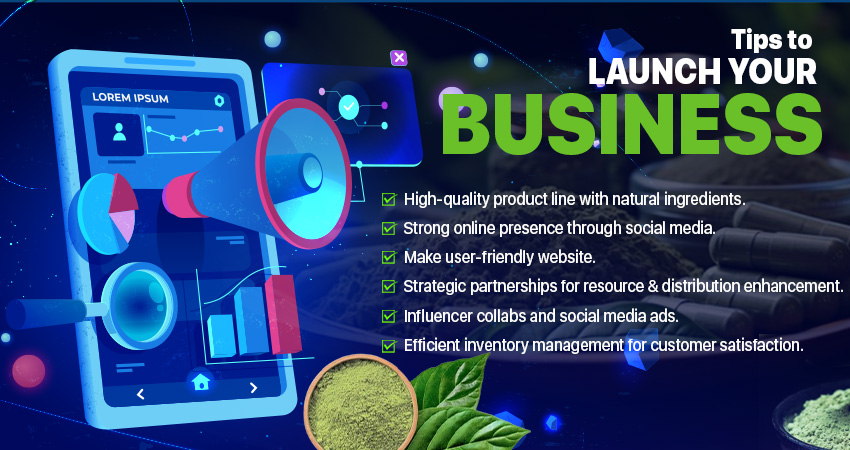
From strategizing networking tactics and developing effective marketing plans to understanding government norms and putting together a team, we’ll present the best methods for startups to launch their businesses off the ground.
1. Establish the Product Line
Start by creating a high-quality product line for your business because it’s crucial to success. You must understand the norms and standards associated with the Kratom industry to ensure your products meet your buyers’ expectations.
Stay consistent with your product line to retain loyal customers. By using natural ingredients and incorporating strict quality control methods, you can make your company reliable and reputable.
Invest in eye-catching packaging and branding to differentiate your merchandise from competitors and attract new buyers.
2. Build an Online Presence
No Kratom marketing strategy is complete without a Kratom digital marketing agency. You need a strong presence on the internet, for which you must build a website. This website must be easy to navigate and display the products appropriately to be able to attract customers globally. Social media presence further increases followers and brand awareness.
Content marketing strategies and SEO bring in website traffic and rankings. Interacting with customers regularly builds loyalty. Just remember that building an online presence takes time and effort but ultimately benefits your Kratom company.
3. Strategic Collaboration
Strategic partnering is another powerful tool that can contribute to the success of your business. By working with the major players in the industry, such as suppliers, distributors, and manufacturers, you’ll receive a network of resources and build connections that can push your entrepreneurial venture forward.
Collaborating with these entities helps you save money, increase distribution channels, and offer numerous products to customers. Furthermore, working with reputable organizations can help generate trust and credibility.
When you work together, utilize each other’s strengths, and neutralize each other’s weaknesses, you create mutual benefits, leading to long-term success.
4. Employ Unique Marketing Strategies
There has been unprecedented growth in the Kratom industry recently, which reeled in entrepreneurs looking to build their businesses.
Due to ever-rising competition, a strong marketing strategy is mandatory to remain in the game. Entrepreneurs must explore innovative tactics to stand out from the crowd.
To that end, work with influencers, leverage social media ads, implement effective SEO strategies, and create appealing video content. These will help you reach your target audience and stay relevant in an ever-changing playing field.
5. Prioritize Inventory Management
One strategy to promote your Kratom business online is to use an infallible inventory management system. Without it, you may run out of stock and ultimately fail to meet customer needs.
That’s why you must invest in an inventory management system and associated tools. You need them to track inventory, keep tabs on orders, and monitor customer demands.
As you’ll be selling Kratom online, you must maintain accurate inventory levels to ensure your customers always have access to the product they need.
6. Consider Pricing and Payment
Pricing is an influential factor in making a business successful. Customers always keep their eyes peeled for companies offering the best value for their money. Naturally, you need to keep your prices competitive to establish yourself as a reputable vendor.
Make sure your prices are reasonable and affordable compared to your competitors. Incorporating flexible payment options should also be on your list of priorities to accommodate customers’ preferred modes of payment.
Include electronic payment methods, cash on delivery, and installment plans if required.
7. Stellar Customer Support
Finally, you need a responsive customer support system. Without it, business success can’t be guaranteed. With a reliable customer support system, you’ll make all the difference in satisfying your customers and driving business growth.
Establish an omnichannel communication that remains open at all times so that you can demonstrate attentiveness and concern for the needs and feedback of your buyers.
A responsive customer support system will help you address issues and concerns quickly and satisfactorily.
You may consider building a team of customer support executives or investing in software solutions. Both can help you maintain organizational reputation and generate customer loyalty.
Must Read: Fixing Hemp Marketing Email Blunders: A Practical Guide
5 Proven Tactics to Sidestep Vape Advertising Constraints
Advertising vapes is complicated. Marketing tactics are essential for vape businesses in this highly competitive landscape, where a multitude of brands and products exist. It is crucial to find ways to stand out from the crowd.
Vape businesses have been evolving, necessitating knowing the complex regulations to reach the target audience successfully. In this blog, we dive into vape marketing tactics, creating a thorough guide you can use to drive sales while establishing brand authority.
5 Effective Vape Advertising Tactics
Target the Right Audience
You don’t want to misfire. Target the right audience to reach those interested in your products or services. You must understand who your potential customers are and what they like. It will help you personalize your marketing message and channels appropriately.
For instance, ask yourself who your prospects are. If they are young adults who want to cease smoking, marketing on social media is the best way. Create engaging and compliant content addressing the specific challenges they can overcome with vapes.
Adhere to Vape Industry Regulations
In this niche industry, compliance comes first when you think of vape ads. It is a strict requirement. These regulations ensure that a business functions ethically and legally. In America, the FDA (Food and Drug Administration) monitors vape marketing and established multiple regulations, such as:
- Businesses cannot market their products as smoking cessation tools
- They cannot make false or misleading claims about their products
- They cannot market to minors
If a business violates these regulations, it can face drastic penalties, like fines, product recalls, and even business closure if it goes too far.
The problem here is that businesses market vaping as a safer alternative to smoking, but there is limited research on the long-term effects of vaping. So, we recommend being upfront and honest about all the aspects of vaping. Ensure industry compliance with:
-
Age Verification Systems:
Vape businesses must never market to minors. They can show compliance with age verification systems in place to keep minors from accessing vapes.
-
Compliance with Platform Policies:
Marketing may seem easy on social media like Facebook and Instagram, but it’s not. Each platform has its rules, and believe us, they are strict. Vapes come under tobacco marketing restrictions, and trying to market beyond them can result in ad removals and account suspensions.
-
Transparent Marketing Practices:
Nobody does it, but you should. Transparency is not a trend but a great way to build customer loyalty. Tell your prospects about the pros and cons of vaping.
Team Up with a Vape Influencer
Influencer collaboration is the thing in 2024! It is a game changer for a niche industry like vape. Collaborating with influencers aligned with your brand can help grow reach and develop credibility in the vaping community. They can also help you promote your products directly to their followers, which is massive as influencers are celebrities in their own right.
Partnering with a vape influencer means getting marketing assistance from industry experts. Just consider their:
- Following
- Engagement rate
- Target audience
- Brand alignment
Also, remember that just like we asked you to maintain transparency with your target customers, we suggest being transparent with your partners. Collaborate on content aligned with responsible vaping practices.
Must Read: How to Enhance Vape Marketing With Strategic Ad Management
Leverage Retail Partnerships
Like influencers, partnering with retail stores can benefit vape businesses. Collaborate with retail stores to sell your products, which will expand your reach, boost brand visibility, and drive sales.
What’s important here is to navigate the tactic responsibly without compromising compliance with the imposed regulations. Check out a few ways to utilize retail partnerships as a marketing strategy in the vape industry.
- Educational Materials: Train the retail staff and give them educational materials to communicate your product’s information, usage instructions, and safety precautions to buyers. It indicates responsible product distribution.
- Diverse Distribution Channels: Teaming up with different retail outlets like vape stores, gas stations, convenience stores, and online retailers opens the doors to a broader audience. This way, you enjoy increased accessibility and exposure.
- Brand Awareness: Did you know that retailers can help you with branding? It may involve event sponsorships occurring within the retail space, co-branded materials for marketing, and exclusive product lines to help heighten brand awareness.
Use Event Sponsorships
Vape industry giants use events (vape expos, trade shows, community gatherings) to draw their target audience and increase brand visibility and reach. They sponsor events to engage with their prospective customers. It also provides them with a platform to demonstrate their brand and foster a sense of community.
Apart from attracting customers, sponsoring events helps businesses build healthy and beneficial relationships with other brands in the industry.
When you decide to sponsor an event, consider its target audience. You need not risk wasting valuable time, effort, and money on something that does not bear fruit. Ensure the event is advantageous to your business in marketing it.
Writing-Off
Understanding these methods is crucial to bypass the vape marketing restrictions, whether online or offline. These are not too difficult to follow. To sidestep the constantly changing rules and regulations and stay a step ahead of them, you must do things differently. The conventional thought process of using digital marketing to do all the promotional stuff does not sit well here. If you are looking for professional vape marketing solutions, feel free to consult with our professional for free. We are always here to light up a torch when the clouds of restrictions engulf you.
Must Read: Secrets for Advertising Your Restricted Products Online